
By Christina C. Gordon
In the northeast corner of Oklahoma, in Ottawa County, sits the city of Miami—a town of approximately 13,000 people nestled in the Ozark foothills, just 15 miles from the Kansas border. Known as the “Gateway to Oklahoma,” Miami (pronounced “my-AM-uh”) is a stop along Historic Route 66 and home to several Indigenous nations, including the Miami, Modoc, Ottawa, Peoria, and Shawnee tribes.
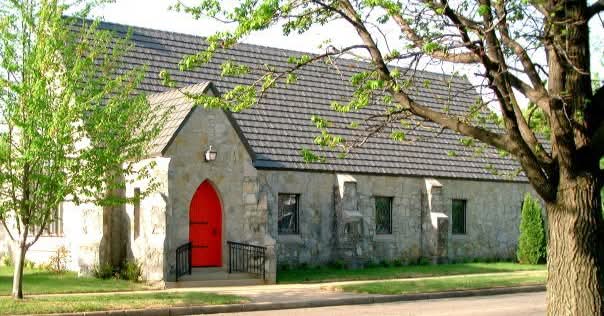
Here, in this small but vibrant town, stands All Saints’ Episcopal Church. Home of “the city’s most photographed door,” All Saints’ offers a bright, welcoming entry that has become a quiet symbol of hospitality. What happens inside, and just beyond that door, tells an even deeper story.
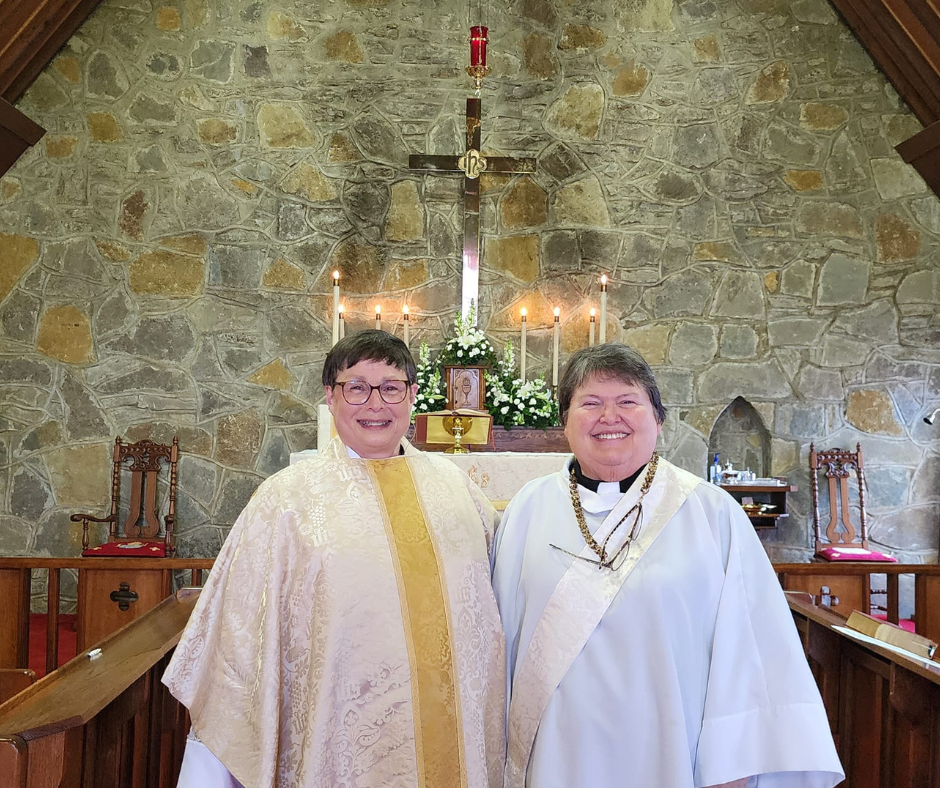
Vicar Mary Susan Whaley and Deacon Kay Boman-Harvey guide this congregation of “movers and shakers” with warmth, humor, and deep trust in the Holy Spirit. When I first reached out to them, I intended to write about one specific ministry serving unhoused neighbors. Yet as our conversation unfolded, it became clear: this was not a story about a single program. It was about a way of “being church.” At All Saints’, the church’s guiding principle of seeing the face of Jesus in everyone they meet is woven into everything this church does.
Called, Again and Again
Birthday twins and best friends for over 25 years, Mary Susan and Kay are a dynamic duo in ministry with similar but different paths to a call.
Both leaders were raised in the Disciples of Christ Church, and both spent roughly forty years in the classroom; Kay teaching High School French and Spanish, Mary Susan serving as Director of Choral Activities at Northeastern Oklahoma A&M College. Their classrooms formed generations of students; their church would eventually become an extension of that same steady presence.
Kay first experienced Episcopal worship after attending a Mardi Gras party with friends. “I thought, ‘Well, if I can play with them, I can pray with them,’” Kay told me. Her first Episcopal worship service was the first Sunday of Lent, an intense but fitting beginning. By May of that same year, she was confirmed. Over the next four decades, she served faithfully in church camp ministry as a counselor, camp chaplain, or dean. During this time, Kay struggled with discerning whether she was being called to an ordained ministry or just a lifelong learner at heart.
Turns out, it was both. This summer, Kay will celebrate her 30th anniversary of ordination as a deacon in the diocese of Oklahoma, formed locally long before the inception of the Iona Collaborative.
Mary Susan began the ordination process around the same time as Kay, but stepped away to care for ailing parents. While Kay managed her bivocational role in the church, Mary Susan fell in love with collegiate ministry and served in various roles for several years.
However, when the COVID pandemic shook up the world in 2020, things changed for both women. Kay left the classroom permanently, and Mary Susan felt that still, small voice reminding her of the path she had begun almost forty years earlier. That, and the voice of a mentor in the diocese, encouraging her to get back on the path. Originally, Mary Susan laughed this off, thinking she was too old to start something new. When she mentioned that she would be seventy by the time she was ordained, her mentor chided her, “God really doesn’t care how old you are.” That phrase reminded her of the story of Abraham and Sarah. “So I joined Sarah and laughed, knowing I was called,” she said.
Through the Iona School of Formation in the Diocese of Oklahoma (an Iona Collaborative member diocese), Mary Susan was ordained to the diaconate in December of 2022 and to the priesthood on June 24 of 2023.
Mary Susan’s connection to the Iona Collaborative opened up development opportunities for both her and Kay, through continuing education offerings, annual retreats for study, rest, and connection, and Thriving Bi-Vocational Congregations workshops that opened their eyes to the wide and varied iterations of small and rural churches within The Episcopal Church.
At the 2025 workshop in Baltimore, MD, Kay, Mary Susan, and All Saints’ member, Sally Heydt, were part of a small church cohort led by Iona Spiritual Director, Carla Burzyk. Gathering with small church leaders from around the country was “spiritually refilling,” to quote Kay. “That’s one of the things I like about Iona: we get to be with people that, for the most part, are in smaller places and that are far-flung. We all have similar problems and similar joys. Reinforcing that and reminding us of that is a very valuable part of working with Iona: to be able to share and support one another across the country.”
Both women also benefit from Iona’s continuing education offerings, participating each semester in online courses with small church leaders from all over. “They may be virtual friends, but I do feel like I have a friend in…Connecticut or Michigan,” said Mary Susan. “We can reach out and tap folks for suggestions or help with something.”
The exposure to spiritual direction through Iona has also been incredibly valuable, according to both leaders. Kay participated in the spiritual renewal track of Iona’s Annual Retreat in 2025.
“Developing an understanding of how to use spiritual practices both for myself and with a congregation was not something readily available to us, previously. That was not part of our day-to-day, year-to-year,” Kay said.
“And now it’s becoming much broader, and we can lead other people to that kind of thing,” stated Mary Susan. Her time with Iona has awakened in her the confidence to share with individuals when she sees their unique gifts and skills that benefit the community.
“We have a church member named Rose that I cornered in the kitchen one day, and I told her, ‘You should really consider spiritual direction. I think you’d be an outstanding spiritual director.’ Spiritual directors are wonderful, but have not always been very available to rural spaces.”
Now, under the guidance of All Saints’ very own in-house spiritual director, Rose, the church has invested in a meditation room, converting a space previously used for storage into a quiet place for reflection and listening. The congregation is also working on building an outdoor labyrinth, a gift to the community, with an open invitation to “come and see.”
“This exercise of deep listening has awakened us, and has everything to do with this ‘roundabout thing’ with the ministries we do here in Miami,” said Kay.
The People of All Saints’
Like most rural communities, All Saints’ is dwindling in size due to an aging congregation. A large percentage of members are sixty-plus in age, and the church worships around 25 people on Sundays. This is a familiar story: a formerly larger congregation with more financial resources is now living into the reality of holding a smaller roster and smaller purse. Once a church that could simply write checks to support community needs, All Saints’ now offers something different, and perhaps more powerful: presence.
“We’re busy all the time. Kay and I can put an idea out there, but our folks run with it. Or even better, they come to us with ideas. Their eyes have been opened to seeing things around them…they are truly committed to seeing the face of Jesus in our community,” Mary Susan shared.
“They come up with the ideas. We help them as the clergy team. We may help them get those ideas started, but we also step out of the way and let them be in charge of things,” said Kay. “And I fully believe that part of the catechism that says the ministers of the church are the lay people. I want the lay people to be out first. Our current bishop supports the idea of lay-led, clergy-supported churches. I think our time with Iona has fostered that, to be honest with you.”
This shared leadership model has become central to how All Saints’ embodies its calling. The clergy help discern and encourage. The people lead. And together, they listen for the Holy Spirit’s next invitation.
That listening prepared them for an unexpected encounter.
A Dog Named Blue
A gentleman named “Buddy” began spending his days in the church pavilion on the backside of the property. With him was Blue, his white-coated service dog with intensely blue eyes. Being animal lovers themselves, Mary Susan and Kay knew the key to approaching Buddy was to make sure he knew they understood Blue was part of the package. They began by offering Blue water in the summer heat. In time, Buddy accepted their hospitality, as well.
“It took a while, but eventually, we would look each other in the eye, which was amazing,” Kay shared. At the time, Buddy was living on the street, one of thousands of people experiencing homelessness in Oklahoma. As they got to know him, the church learned more about who Buddy is as a person: a man in recovery; a born and raised Roman Catholic deeply formed in faith; a former professional with gifts and skills to share with the world; a man with a ministry of his own, supporting others who have fallen on hard times through mentorship and counsel.
Over the next several months, Buddy and Blue were invited to church events regularly, including the annual Thanksgiving dinner. During this event, church members reported to Mary Susan that Buddy seemed very upset. After talking with him, she learned that he had suffered a devastating loss: a young man with whom he had been working had ended his life. Troubled by long-held fears about eternal judgment, he worried for the young man’s soul.
So, Mary Susan did what any good Episcopal priest would do: she took him into the sanctuary, sat him down, and together, they prayed The Prayers at the Time of Death: a practice offering mercy, grace, and the promise of deliverance.
Buddy and Blue have been regulars on Sunday mornings ever since.
Following Those We Serve
“As our relationship with Buddy developed, we realized that we could support him in continuing his ministry with people living on the street,” said Kay. “Buddy regularly shares with us a list of items we can put in the church’s Blessing Box. Not what Mary Susan thinks I should go to the store and buy, but what’s really practical for the people we’re serving.”
Ministry expanded organically. Church members started seeing other opportunities to support individuals experiencing homelessness.
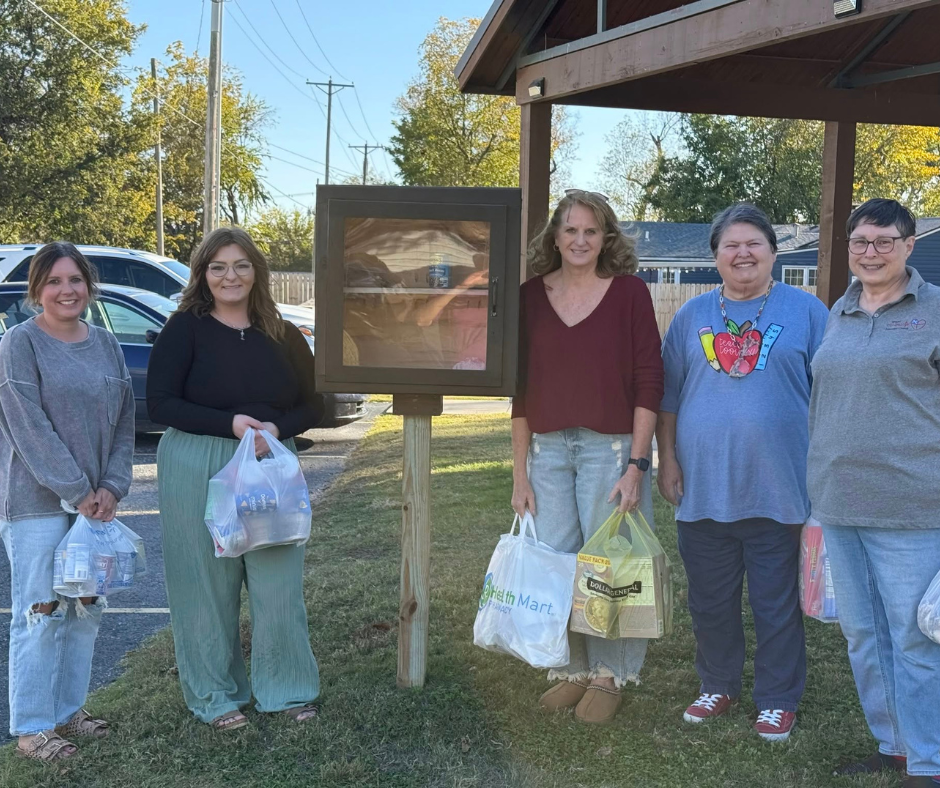
During a particularly bitter cold snap, the city opened a warming center in a nearby facility and asked local organizations to help make it happen. All Saints’ stepped up and cooked, served meals, and spent time getting to know more of their neighbors. Kay and Mary Susan learned that the director of the local Salvation Army is a former student of theirs. One more intersection in an ever-growing safety net of resources.
The next winter, when another church in the community couldn’t host the warming center as planned, All Saints’ offered their building as a daily site. “We fed these folks a couple of good meals, played games with them, watched television, and then, because it was right after Christmas, they helped us take down the Christmas decorations around the church. They wanted to help and be involved in something,” Kay said.
As with most things, once you “see” something in your community, it’s hard to “unsee” it after that. The issue of Buddy’s shelter became a concern for several church members. His situation at the time was not sustainable and eventually became unviable. When All Saints’ learned of this, they looked at the largely unused rectory on their campus and considered what the next right step might be.
Ripple Effects
Things started slowly, with Mary Susan giving Buddy access to the garage keypad for the rectory in bad weather. After prayer and trust-filled discernment, Buddy was invited to move in on a more steady basis. Being in this space allows Buddy to continue his ministry to the unhoused in the community. He also helps with church ministries, as well. He shares his gifts and skills with another All Saints’ ministry, Teachers’ Toolbox, where he unboxes and organizes supplies, reviews the school supply needs for local classrooms, works alongside other church volunteers, and makes sure the teachers leave with every item their students need for a successful school day.
When asked how this unique housing solution came to be—in an institution with many decision makers and levels—how this church knew the next right step, Mary Susan replied, “A lot of trust. And, to be honest with you, I think the voice of the Holy Spirit spoke to me.” A practical solution to a real problem: someone needed shelter; the church had a shelter to offer.
“It’s been so organic…For me, this has to be the way the early church started,” Kay reflected.
Being in relationship with Buddy means that All Saints’ gains from his knowledge of what it means for people living on the street. For example, personal documents can be difficult to track down, and without them, individuals can’t access much-needed assistance. Buddy connected the church with the organizer of the Good Neighbor Project, a grassroots group turned resource center offering this service and more. Another church in the area donated a van, and now All Saints’ members can volunteer to transport their neighbors to the resource center on a regular basis.
Having learned that hygiene kits are very useful to people living on the street, the members of All Saints’ now meet regularly to put together these compact, portable packs of toiletry items. This powerhouse of twenty-five attendees on a Sunday morning packs and provides hygiene kits for five local organizations. Just another way they “see” their neighbors and fulfill a need.
“Buddy has taught us so much…that one encounter opened up so many new opportunities…what a difference it makes when you can put a face and a name with somebody that is living differently than you,” shared Kay.
Individuals from the unhoused community stop by the pavilion—also known as “Buddy’s office”—to check in with him. He often has food brought over by All Saints’ parishioners to offer them. He sometimes takes a backpack inside to the washer and dryer. He has become the church’s connection; their resource for better serving the underserved.
Another Way
In a time when the vitality of congregations is often measured by numbers in pews, All Saints’ has experienced a deeper shift.
“When we first started hosting community events, we hoped we would get x, y, z person into the pew,” Kay shared. “That never comes up now. Now, it’s important to feed the community and be a neighbor to our neighbors. To me, that’s growth.”
All Saints’ did not set out to create a homelessness ministry. They set out to follow Jesus. By listening deeply: to scripture, to one another, to the Holy Spirit, and to a man with a dog. They discovered that the next right step is often simple, relational, and right in front of them. They offer us another witness: small churches are not dying. They are becoming.
“We’re following those we serve,” Kay said. “You clothe the people who are naked. You feed the people who are hungry. We’re following them, and in turn, we get clothed and fed, as well.”
“Every time I take stock, I just think how blessed I am that God has set me down here,” Mary Susan shared. “As I said, I’m not patting Kay or me on the back. It’s our people and the Holy Spirit. But I’m sure glad the Holy Spirit lets me tag along.”