
Ministry, marriage, and the second half of life
When Joe and Audrey Rose talk about ministry, they don’t begin with strategy or qualifications. They begin with stories. Stories of surprise, of hesitation, of moments when God showed up in ways they didn’t expect.
By most accounts, their story should have been winding down. Joe had retired after a 40-year career in the propane industry. Audrey had spent years in business and volunteer work, and, for a long stretch, away from church altogether. But what has unfolded instead is something neither of them could have planned: a shared calling that is reshaping small congregations and quietly renewing community life.
“I was not going,” Audrey says, recalling the first event that set things in motion. A friend had been spurring her to attend a nearby Episcopal Revival, and Audrey had refused. “No, absolutely not.” She went anyway. In that room, she encountered something she still struggles to describe: “It was probably the first time in my life I totally felt the presence of God.”
The speaker was Bishop Michael Curry. Audrey didn’t know him then. She only knew that something had shifted in her, irreversibly.
That moment didn’t just move her emotionally. It changed her trajectory. Not long after, at a conference in Atlanta, she experienced what she now calls a second “coming to God moment.” A clear sense that she was being called into ministry. She had wandered into a quiet hotel ballroom, drawn in by the work of experiential worship curator Lily Lewin. The interactive liturgical displays stopped her in her tracks. She felt a divine nudge: this. This is what you are meant to do.
“I didn’t have any background,” she says plainly. “I just started.”
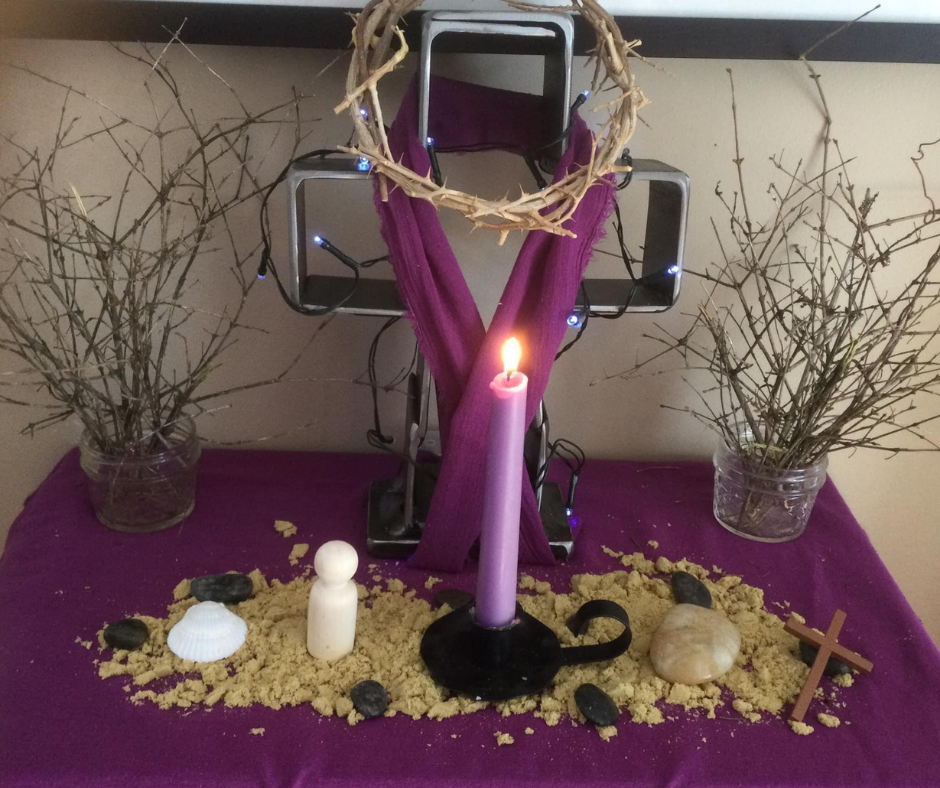
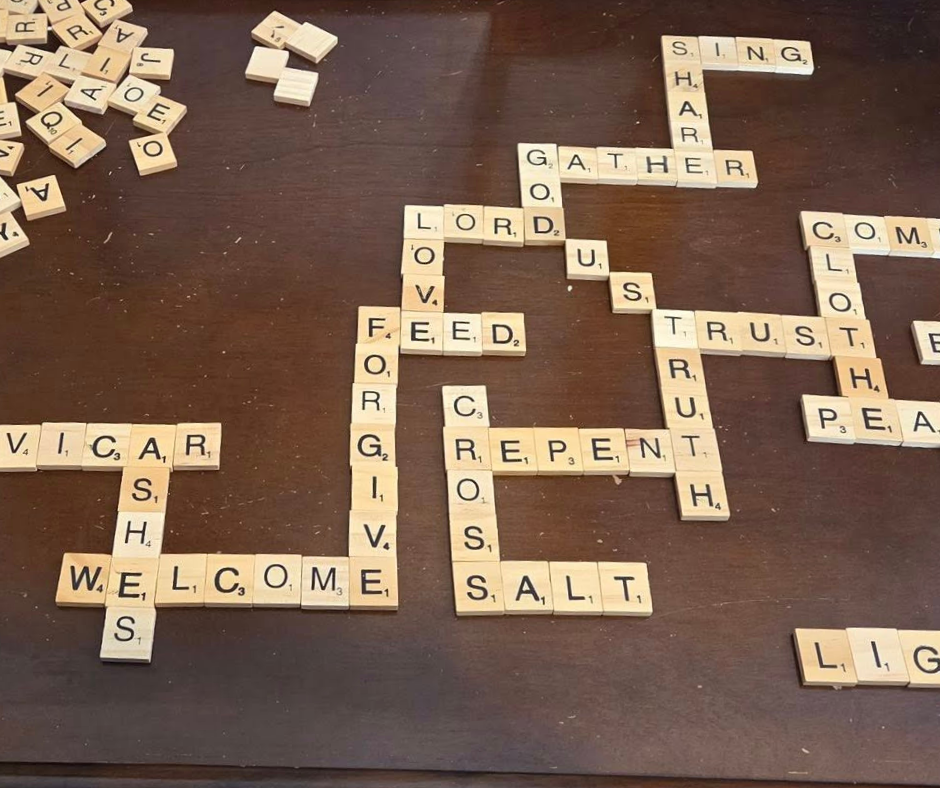
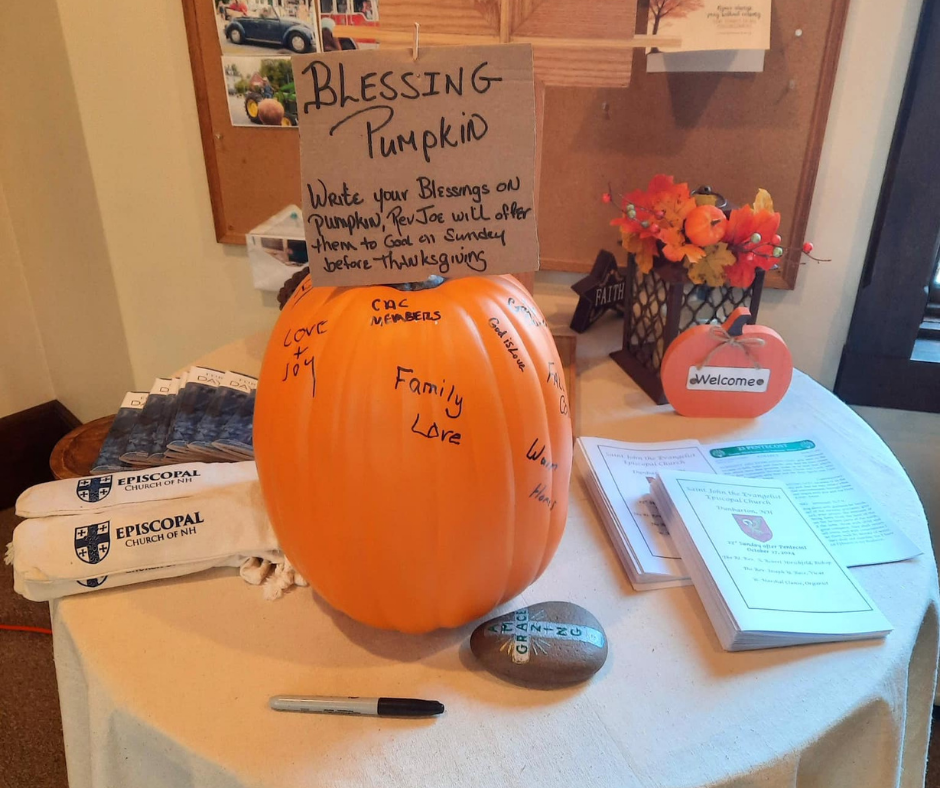
Audrey had recently completed her certificate in lay preaching from the New Hampshire School for Ministry (NHSfM), a member of the Iona Collaborative network. She learned, in one of her first sermons, that when you hit a nerve in a congregation, you’re probably onto something true. Audrey preaches regularly for several churches in the area. She admits she loves preaching, and weaving in worship experiences for the churches she serves is the icing on the cake. Prayer trees open to both church and community members, with prayers offered up weekly during worship; tactile activities like large-group puzzles or letter tile games that tie into liturgical themes. She lays out the invitation, and the community accepts joyfully.
“It is lighting that little spark and letting it burn into a flame,” Audrey explains.
A key slid across a desk
Joe’s path was different, but no less persistent. He describes a call he had felt for years, one he repeatedly deferred with good humor. “I used to put God off,” he admits. His standard deflection: he had a wife with a lifestyle to which she had become accustomed.
It wasn’t until retirement that he finally said yes. While waiting to begin his own coursework at NHSfM, Bishop Rob Hirschfeld called Joe into his office. He handed Joe a business card with an address on the back. When asked about the location, the Bishop slid a key across the desk to what is now known as the Episcopal Mission in Franklin, NH: a former church building that had been closed for close to 20 years. Nervous about his first initiative, a “Lunch with Jesus” weekly community meal, Joe invited two friends to fill out the crowd in case of low turnout. The first week, 12 people showed up. The church’s former organist, a woman in her eighties, offered to play for the gathering. The next week, she returned and brought the church’s crucifix she had taken home for safekeeping. As the weeks went on, others joined in, bringing with them items they had been sheltering.
Today, the Episcopal Mission of Franklin hosts worship every Sunday and is a vibrant part of the town. “They’re still going strong,” Joe confirms.
From there, Joe entered a three-year formation program through the New Hampshire School for Ministry, received his certificate in theological studies, and was ordained on December 9th of 2023. The next day, he began his service as vicar at St. John the Evangelist in Dunbarton, a congregation that had been without clergy for seven years. Average Sunday attendance hovered around eight. The building looked closed. When Audrey called the city about adding St. John’s to the city’s Facebook and webpages, she was told the town didn’t have an Episcopal Church.
The congregation, shaped by years of absence, had grown wary of change.
“They were in a liturgical desert,” Joe says.
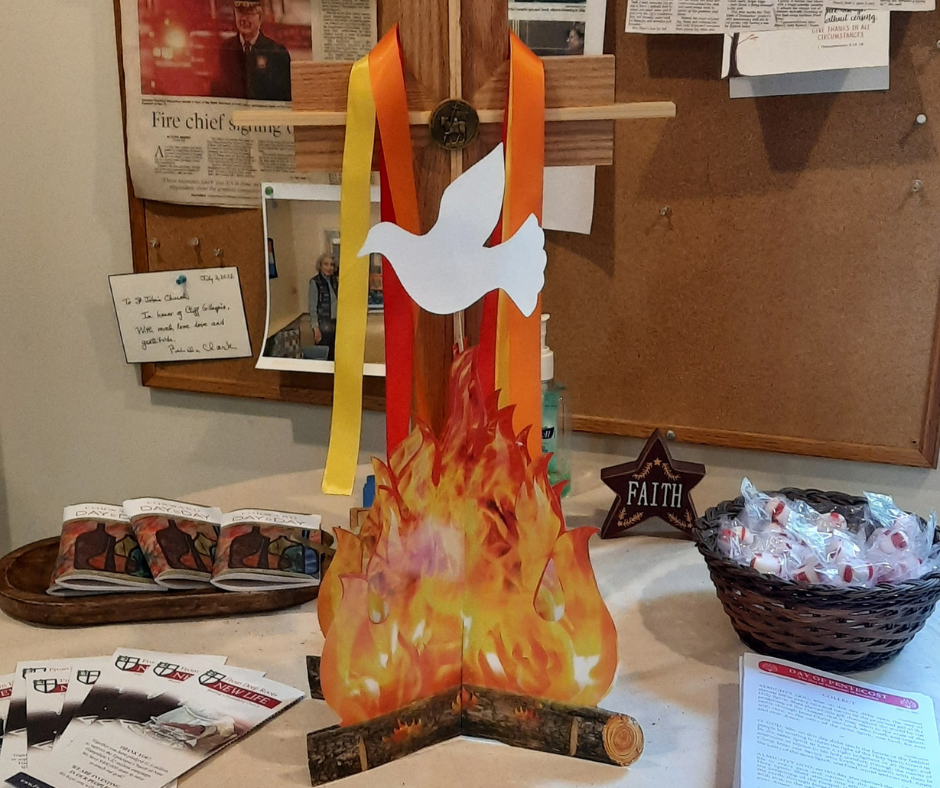
What followed was not a quick turnaround. There were missteps, resistance, and hard moments, especially as Joe reintroduced practices that had long been absent. A little over a year into his time at St. John’s, while attending an Iona Collaborative Thriving Congregations workshop hosted by the Diocese of New Hampshire, Joe was introduced to a framework for understanding the feelings churches experience when facing change. Adapted for use in the congregational setting, Iona’s version of the Bridges’ Transition Model names the intellectual, emotional, and spiritual journey church members and their leaders must take on the way to transformation.
For Joe, this information resonated on a personal, practical level. “It all made sense: they were angry, they were fearful, they were disoriented. I turned to our warden and told him, ‘Boy, I wish I’d have had this when I got to Dunbarton. I might have done some things differently.’”
He went back to St. John’s that week, passed out copies of the resource, and used it in his sermon. By naming the grief, he offered a pathway for hope and healing.
Asset-Based Community Development in Action
Once the congregation began to feel settled internally, it was time to consider a mission that served those outside the walls of the church. Joe informed the group, “I’m not telling you what the mission is. I don’t know. It’s what is in your hearts. How do you want to serve God?”
At a town meeting, Joe heard community leaders name a growing concern: isolation among seniors. Back at the church, he looked around. A parish hall. A kitchen. A group of people with time and a history of hospitality.
“What do we actually have?” he asked.
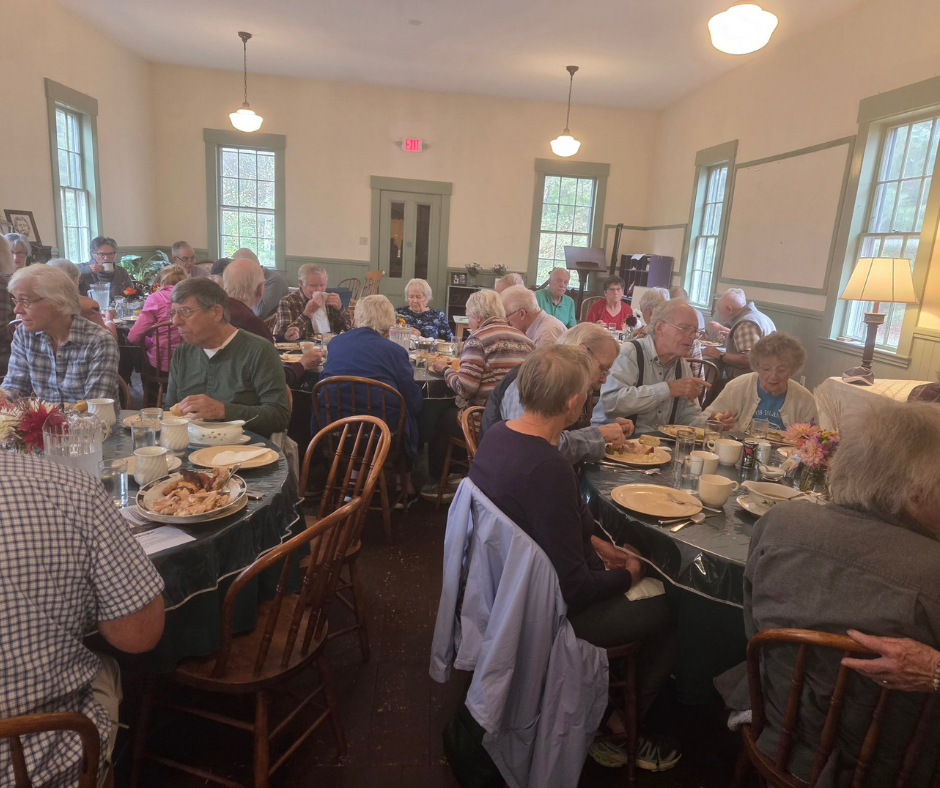
The answer became a monthly senior lunch. Free meals. No pressure. Space to gather, talk, and be known. The lunches are now well attended. Community members who have no formal connection to the church show up, not just to eat, but to help. Flowers appear on tables. Donations exceed costs. Relationships form across decades of distance.
“You can just see the Holy Spirit at work,” Audrey says.
The impact has extended beyond the meal itself. People who hadn’t been inside a church in decades are returning. Others are discovering a sense of belonging for the first time. And perhaps most tellingly, the congregation itself is changing.
Easter Sunday, twenty-seven people filled the pews. A young man in his twenties sat at St. John’s pump organ—built around 1800—and kept the pump going, because his grandfather had once held the very same job.
“A couple weeks ago, someone said, ‘What else can we do?’” Audrey recalls.
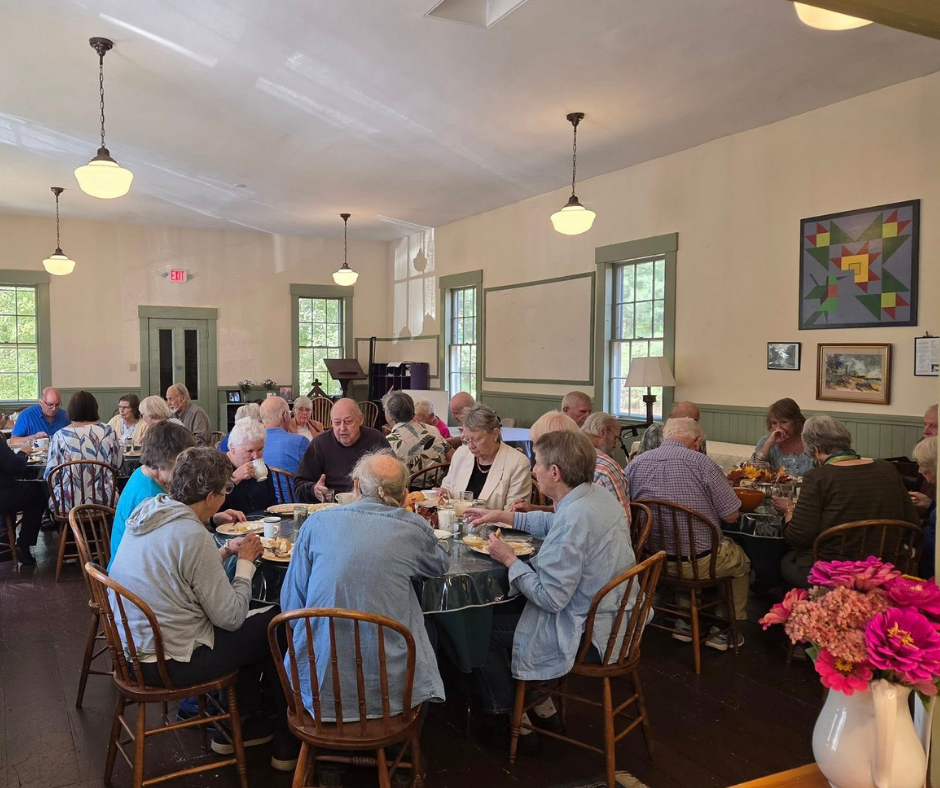
Joe, always with a twinkle in his eye, shares, “You can just see the church coming alive.”
The church in the living room
That shift, from maintenance to mission, is at the heart of Joe and Audrey’s shared ministry. It’s also deeply relational. Audrey’s work complements Joe’s in both practical and imaginative ways. She preaches regularly, leads Bible studies, and creates interactive worship experiences that invite participation rather than passive listening. Joe recognizes Audrey’s ability to jump in and get involved as part of what makes her his “secret weapon” in building community.
“The more you can get a congregation involved,” she says, “the more they want to know.”
Her ministry also extends well beyond the walls of any one church. What began during the COVID-19 pandemic as daily online prayer has become a steady rhythm of compline and evening prayer, broadcast on Facebook four nights a week. It is informal, conversational, and grounded in real life (dog stories included). On a given night, over two hundred people tune in from Texas, California, France, and beyond.
“I think that’s part of the future of the church,” she says.
A calling is still a calling
Together, Joe and Audrey embody a model of ministry that is increasingly vital: collaborative, locally rooted, and open to the gifts of both lay and ordained leadership. They are quick to name how much support has mattered along the way, from clergy who encouraged Audrey’s voice to a bishop who trusted Joe’s leadership.
Audrey is candid about how rare that support can be. She has known lay leaders whose callings were ignored or quietly discouraged by the very institutions that should have made room for them. She speaks about it not with bitterness, but with urgency.
“Lay leaders can have just as much calling,” she says. “We need to make it easier for them to pursue it.”
Joe agrees, though he frames it with characteristic directness. When a parishioner once tried to correct Bishop Michael Curry during a visit—insisting that the Franklin mission wasn’t Joe’s church, but God’s church, and that they were simply its caretakers—Curry turned to Joe afterward with a grin. “I knew you were trouble,” he said.
Joe took it as a compliment.
Not finished, but unfolding
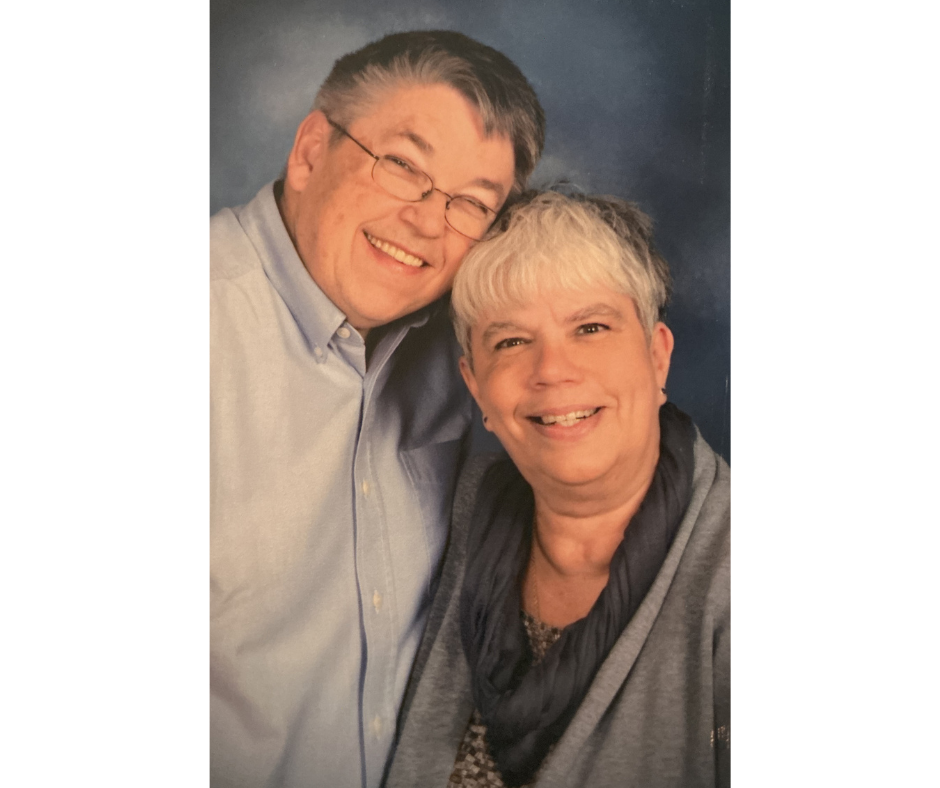
Their story is one of showing up; sometimes uncertain, often learning, always attentive to what God might be doing next. It is also, unmistakably, a shared vocation. Married for more than four decades, they navigate ministry the way they navigate life: with honesty, humor, and a deep respect for each other’s gifts.
For the last two years, on Christmas Eve, a neighbor who does not attend St. John’s drives out to the church and lines the driveway with lanterns. Nobody has asked him to. He just comes. And the light is there when the congregation arrives.
That is the kind of ministry Joe and Audrey Rose are building: not ownership, but stewardship. Not a finished picture, but a work still unfolding.
Retired? Technically, yes.
But in every way that matters, Joe and Audrey Rose are just getting started.